
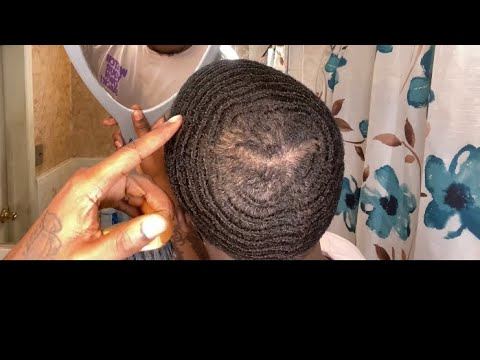
Coarse Hair Waves: The Deep-Dive Playbook for Stubborn Texture
Coarse hair is the heavyweight division of wave training. Each strand is thick, strong and stubborn, with a curl pattern that would rather stand up than lay down. Wavers with fine hair envy its density; wavers who have it know the fight is real. The good news: coarse hair, once trained, holds the deepest, most defined waves in the game. Elite Eli (@EliteEli) built the angle breakdown in the video below specifically for this texture — this playbook gives you the full system around it.
Why coarse hair needs a different timeline
A coarse strand has more mass to persuade, so the persuasion takes longer. Expect your first real pattern to take weeks longer than the fine-haired timelines you see online, and expect wolfing to be your best friend: coarse hair needs length before it can lay, because short coarse hair springs straight back up. Six-to-eight-week wolfs are normal here; some coarse wavers run longer.
Judging coarse progress by fine-hair schedules is the fastest route to quitting a pattern that was actually coming. Judge by connection and depth instead — are the waves linking up, is the crown closing, does the pattern survive a full day. Those are the metrics that matter for this texture.
Brush grades and session structure
Coarse hair can take what would destroy finer textures: hard brushes are your primary training tool, especially during a wolf, with a medium for daily work and a soft brush reserved for finishing and for the days right after a cut. Work the full eight angles every session — coarse hair hides its weak spots, and skipped angles become the forks you fight later.
Moisture is the other half of the system. Coarse strands drink product and still run dry, and dry coarse hair will not lay no matter how hard you brush. Build moisture in layers — a leave-in or cream first, then your pomade or butter to seal — and refresh lightly on non-wash days rather than flooding the hair once a week.
Cuts, compression and the long game
Cut with the grain and guard up: coarse wavers usually keep more length than fine wavers at the same wave depth, because the texture needs that length to complete each wave's curve. Tell your barber the pattern comes first and the sharpness second — a too-short cut on coarse hair resets weeks of work in twenty minutes.
Compression should be non-negotiable and doubled on wash nights. Coarse hair pushes back against a single layer as it dries; the double layer holds the flat lay until the bonds set. Play the long game with this texture and the payoff is the kind of depth people stop you to ask about.
Watch: Elite Eli's 8-angle breakdown built specifically for coarse hair
Video: “How To Brush 360 Waves: 8 Angle Breakdown || COARSE HAIR” by Elite Eli (@EliteEli) · Watch on YouTube
Shop the gear
Everything in this guide runs on the right gear: a durag that holds compression without slipping, a cap that stays put, and fabric that treats your hair right. The durag.store launch lineup is built to that standard — dual-layer construction, long tails, and stitching made to survive the routine. Join the launch list and use code GOLDSTANDARD for 15% off your first order.
Keep learning
- How to Get 360 Waves: The Complete Beginner Roadmap — Basic · Wave Training
- Waves in One Day: The Wash Method for Instant Definition — Basic · Wave Training
- 540 Waves: The Diagonal Pattern for Wavers Ready to Level Up — Extreme · Wave Training
Sources: Video — “How To Brush 360 Waves: 8 Angle Breakdown || COARSE HAIR” by Elite Eli (@EliteEli), youtube.com. Guide written by the durag.store Wave Lab.