Durag Sizing and Tail Length: Getting the Numbers Right
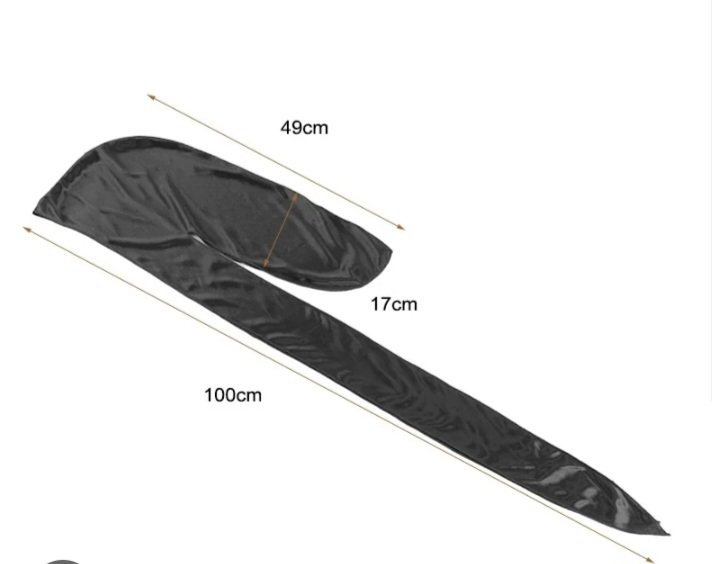
Most durags are sold as one-size, and most sizing complaints come from treating that as the end of the story. In reality a durag has three dimensions that matter — body size, band width, and tail length — and the right combination depends on your head size, your hair length, and where you are in a growth cycle. The Cut Buddy tutorial below shows a well-fitted durag being tied; this guide gives you the numbers behind that fit, using the durag.store reference spec (100cm tail / 49cm body / 17cm band) as a worked example.
The three dimensions
The body (cape) must cover your hair completely with the front edge at the hairline and fabric to spare at the back — a 49cm-class body covers most adult heads at wave lengths. Too small a body tents over the crown and pulls the front edge upward as you tie; too large bunches at the back and folds under the knot.
The band width — the front section that sits across the forehead — spreads the tie's pressure. A 17cm-class band distributes force widely and resists rolling. Narrow bands concentrate pressure, roll into cords, and are the usual source of the forehead line people blame on 'tying too tight.'
Tail length by situation
Standard ties are comfortable from about 90–100cm of tail. If you favour the no-knot tuck method, go longer — the tuck consumes length that a knot does not, and short tails are why many people's first no-knot attempts work loose overnight. Bigger heads and longer hair both eat tail length before the tie even starts, so size up in tail when either applies.
There is no performance downside to extra tail — surplus simply hangs, or gets one loose knot to keep it tidy. There is a real downside to short tails: a strained, slipping tie and a knot that migrates. When in doubt between two sizes, buy the longer tail every time.
Sizing across the wolf
Your head effectively grows as your hair does. A durag that fits perfectly on cut day can be at its limit by week five of a wolf — the cape must now contain more hair, and the tails reach the tie with less to spare. Serious wavers keep one durag in the rotation sized for the deep-wolf weeks.
If a single durag must serve the whole cycle, choose it at your mid-wolf size and accept a slightly generous fit on fresh cuts — a firm tie manages extra fabric far better than technique manages missing fabric. Measure your rotation honestly once, and sizing stops being a recurring problem.
Watch: the Cut Buddy collection tutorial — see how a properly sized durag sits and ties
Video: “Nick Wavy Durag Tutorial | Nick Wavy Cut Buddy Collection” by The Cut Buddy (@TheCutBuddy) · Watch on YouTube
Shop the gear
Everything in this guide runs on the right gear: a durag that holds compression without slipping, a cap that stays put, and fabric that treats your hair right. The durag.store launch lineup is built to that standard — dual-layer construction, long tails, and stitching made to survive the routine. Join the launch list and use code GOLDSTANDARD for 15% off your first order.
Keep learning
- The Best Durag for 360 Waves: A Buying Guide Without the Hype — Basic · Buying Guides
- Reading a Durag Like a Buyer: Stitching, Tails and Fit Checks — Basic · Buying Guides
- The No-Knot Durag Method: Full Compression, Zero Forehead Lines — Intermediate · Tying & Basics
Sources: Video — “Nick Wavy Durag Tutorial | Nick Wavy Cut Buddy Collection” by The Cut Buddy (@TheCutBuddy), youtube.com. Guide written by the durag.store Wave Lab.