
Moisturising Waves Without the Buildup: The Light-Hand Method
More product is the beginner's answer to everything, and it is wrong in a specific way: waves need moisture, but they drown in product. Heavy application coats the hair until the pattern looks dull, the scalp itches, the durag slides on the grease, and flakes of dried product masquerade as dandruff. 360Jeezy (@360Jeezy) works a disciplined product routine inside the wash-and-style method below. This guide teaches the light-hand method — how much is actually enough, where it goes, and how to reset when buildup has already happened.
How much is enough
Start with a pea-sized amount of moisturiser for the whole head. That reads like a typo; it is not. Work it between your palms until they are evenly coated, then apply by smoothing in pattern directions. If the hair still feels dry after it absorbs — give it ten minutes — add half as much again. You can always add; you cannot subtract without a wash.
Oils obey the same math: a few drops, not a pour. The goal is hair that feels pliable and has a healthy sheen — not hair that shines like it is wet or leaves residue on your palm when you touch it. If your hand comes away greasy, you used too much, and your pillowcase is about to learn about it.
Spotting buildup before it costs you
Buildup announces itself: the pattern looks progressively duller despite good brushing, the scalp itches between washes, white flakes appear that are soft and waxy rather than dry, and your durag starts slipping on hair it used to grip. Brushes load up visibly — check the bristle base; grey gunk there is buildup you have been redepositing daily.
Do not respond with more product; that is the spiral. Respond with a proper wash-and-style reset, and consider whether one of your products is the culprit — heavy waxes and thick pomades build up far faster than light moisturisers and natural oils.
The clarifying reset
Once a month, or whenever the signs above stack up, run a clarifying wash: shampoo twice with full brush work each time, condition once, and moisturise with the light hand from a clean slate. The pattern often looks startlingly better the next morning — ridges sharper, colour deeper — because you have been viewing it through a film of old product.
After the reset, audit your amounts honestly for a week. Most wavers discover they can cut their product use in half with zero loss and visible gain. Light hands, clean brushes, monthly resets — that is the whole system, and it keeps the moisture where it belongs: in the hair, not on it.
Watch: the wash & style method from 360Jeezy — the reset that clears buildup lives inside this routine
Video: “HOW TO WASH 360 WAVES: WASH & STYLE METHOD” by 360Jeezy (@360Jeezy) · Watch on YouTube
Shop the gear
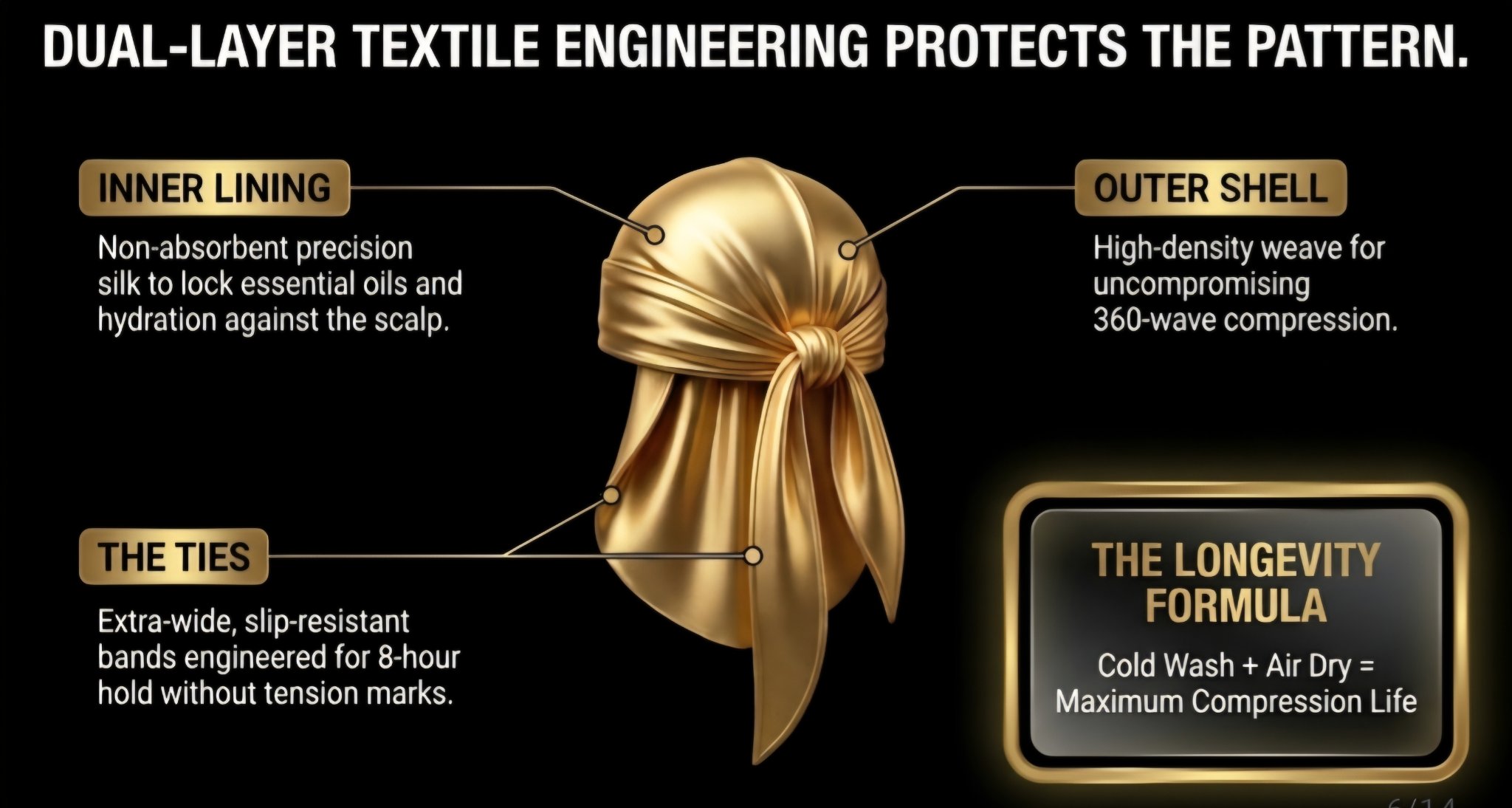
Everything in this guide runs on the right gear: a durag that holds compression without slipping, a cap that stays put, and fabric that treats your hair right. The durag.store launch lineup is built to that standard — dual-layer construction, long tails, and stitching made to survive the routine. Join the launch list and use code GOLDSTANDARD for 15% off your first order.
Keep learning
- The Wash and Style Method: The Complete Wash-Day System for Waves — Basic · Wash & Hair Care
- Wash and Style for Beginners: Your First Wave Wash Day, Simplified — Basic · Wash & Hair Care
- How to Wash 360 Waves Without Wrecking the Pattern — Intermediate · Wash & Hair Care
Sources: Video — “HOW TO WASH 360 WAVES: WASH & STYLE METHOD” by 360Jeezy (@360Jeezy), youtube.com. Guide written by the durag.store Wave Lab.