
Over-Curl and Over-Wolfing: When More Growth Stops Helping
Wolfing works — right up to the week it does not. Past your hair's ideal length, each strand has enough length to complete its curl and start climbing over its neighbours. The pattern gets taller but messier: ridges puff up, the surface will not lay, and brushing feels like pushing rope. That is over-curl, the tax on a wolf that outlived its purpose. PhdInWaves (@Phdinwaves) explains the wolfing science in the video below. This extreme-tier guide covers the signs, the mid-wolf save, and how to find your personal peak length.
Recognising over-curl
The signs arrive in order: first the pattern needs more product and more session time to lay each day; then the surface starts standing up within hours of a session no matter what you do; then individual curls visibly spring out of the ridge lines, especially at the crown and corners. Your compression, which used to hold a perfect lay for a day, now holds it for an afternoon.
The diagnostic difference from ordinary frizz: over-curl is length-driven and uniform. It appears everywhere the hair is longest, and no product change fixes it — because the problem is geometry, not moisture. Each hair literally has more curl than the pattern has room for.
The save: trim, don't restart
If you catch over-curl early, the save is a conservative trim — a cleanup that removes the excess length while keeping the wolf's gains: same barber, with-the-grain, one guard higher than your normal cut, line-up only if needed. The pattern drops back into its lay immediately, because you removed the surplus curl, not the training.
If the wolf has gone far past the peak — months of standing, tangled growth — a fuller cut back to your working length is the honest move. The training at the root survives the cut; what you lose is only the unmanageable length. Wavers who fear this cut and keep wolfing are choosing a worse pattern every week to avoid one honest barber visit.
Finding your peak length
Your peak is personal: it depends on your curl diameter. Tighter curls peak earlier (less length completes the curl); looser textures can wolf longer before over-curl threatens. Track it deliberately — during a wolf, note the week the lay started fighting you. That week, minus one, is your working peak, and it becomes your standing schedule: cuts timed to land just before it.
Write it down like any other training number. Elite wavers know their peak the way lifters know their max — because it was measured, not guessed. The wolf is a tool with an operating range; over-curl is simply what happens outside it.
Watch: the science of wolfing from PhdInWaves — including where the growth phase stops paying
Video: “Wolfing 360 Waves EXPLAINED | Benefits + Science of Wolfing” by PhdInWaves (@Phdinwaves) · Watch on YouTube
Shop the gear
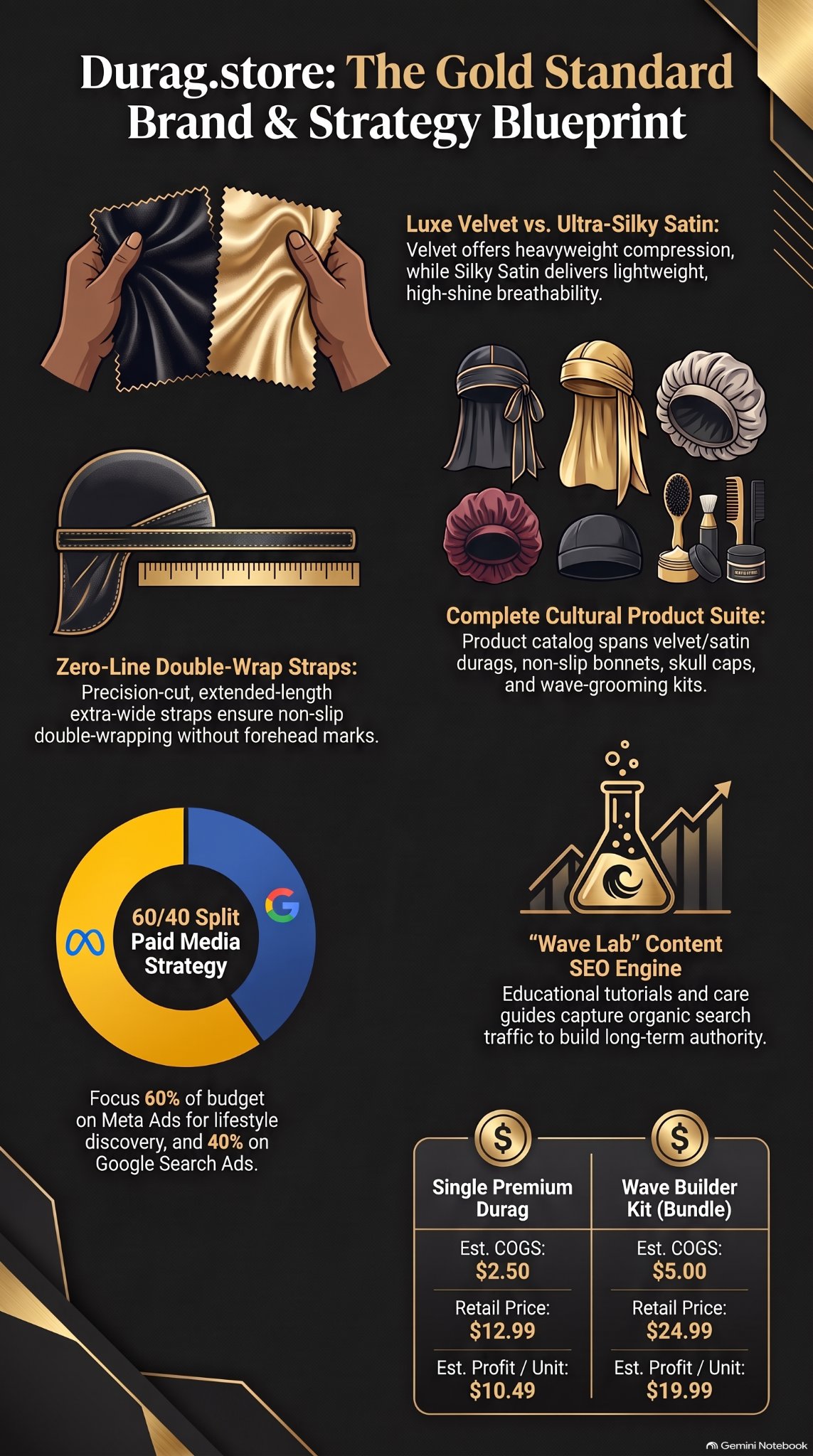
Everything in this guide runs on the right gear: a durag that holds compression without slipping, a cap that stays put, and fabric that treats your hair right. The durag.store launch lineup is built to that standard — dual-layer construction, long tails, and stitching made to survive the routine. Join the launch list and use code GOLDSTANDARD for 15% off your first order.
Keep learning
- Fixing Forks in Your Waves: Why They Form and How to Brush Them Out — Intermediate · Troubleshooting
- Uneven Waves and Weak Sides: The Rebalancing Program — Intermediate · Troubleshooting
- Forehead Lines From Your Durag: Causes and Complete Fixes — Basic · Troubleshooting
Sources: Video — “Wolfing 360 Waves EXPLAINED | Benefits + Science of Wolfing” by PhdInWaves (@Phdinwaves), youtube.com. Guide written by the durag.store Wave Lab.