
Soft, Medium and Hard Brushes Explained: Which One, When, and Why
Walk into any wave forum and you will find people arguing about brushes with religious intensity. Underneath the arguments is a simple system: hard brushes move hair, medium brushes train hair, and soft brushes finish hair — and each has a stage of your journey and a stage of your haircut where it is the right tool. This guide decodes all three grades, when each one earns its place, and how to build a brush rotation without wasting money.
Hard brushes: the movers
A hard brush has stiff bristles that reach through thick hair to the scalp. Its job is the early stages — starting waves on longer hair, and deep-wolfing weeks when your hair is at its longest and thickest. A soft brush on a heavy wolf just skims the surface; the hard brush is what actually reaches the roots and re-lays the base of the pattern.
The trade-off is aggression. On short or freshly cut hair, a hard brush irritates the scalp and can scratch — and it pulls at the surface, which can rough up a pattern that is already laid. Hard brushes are specialists: powerful in the wolf, benched after the cut.
Medium and soft: the trainers and finishers
The medium brush is the daily driver — firm enough to train, gentle enough for everyday sessions on normal-length hair. If you own exactly one brush, own a medium. It handles the entire standard routine from week one to maintenance, on almost every texture.
The soft brush works the surface. It lays flyaways, smooths the finish after a session, and is the safe choice for fresh cuts, tender scalps, and the first days after a haircut when the pattern is most fragile. Many wavers finish every session with a soft-brush pass before tying the durag — think of it as the polish coat.
Building your rotation
The classic three-brush rotation maps to the haircut cycle: hard brush while wolfing (weeks 3–6 of growth), medium as your everyday trainer, soft for finish passes and fresh-cut weeks. As your hair grows through the cycle, you naturally graduate from soft to medium to hard, then reset at the barber.
Care for brushes like you care for durags: pull shed hair out weekly, wash monthly with warm water and a drop of shampoo, and dry bristle-down. A brush loaded with old product and dead hair is redepositing all of it onto your scalp — and a clogged brush loses its grip, which you will feel as sessions that suddenly stop working.
Watch: correct brushing angles from Wavy Merch — the technique each brush grade serves
Video: “How to Brush 360 Waves (Correct Angles for MAXIMUM Progress)” by Wavy Merch (@Wavy_Merch) · Watch on YouTube
Shop the gear
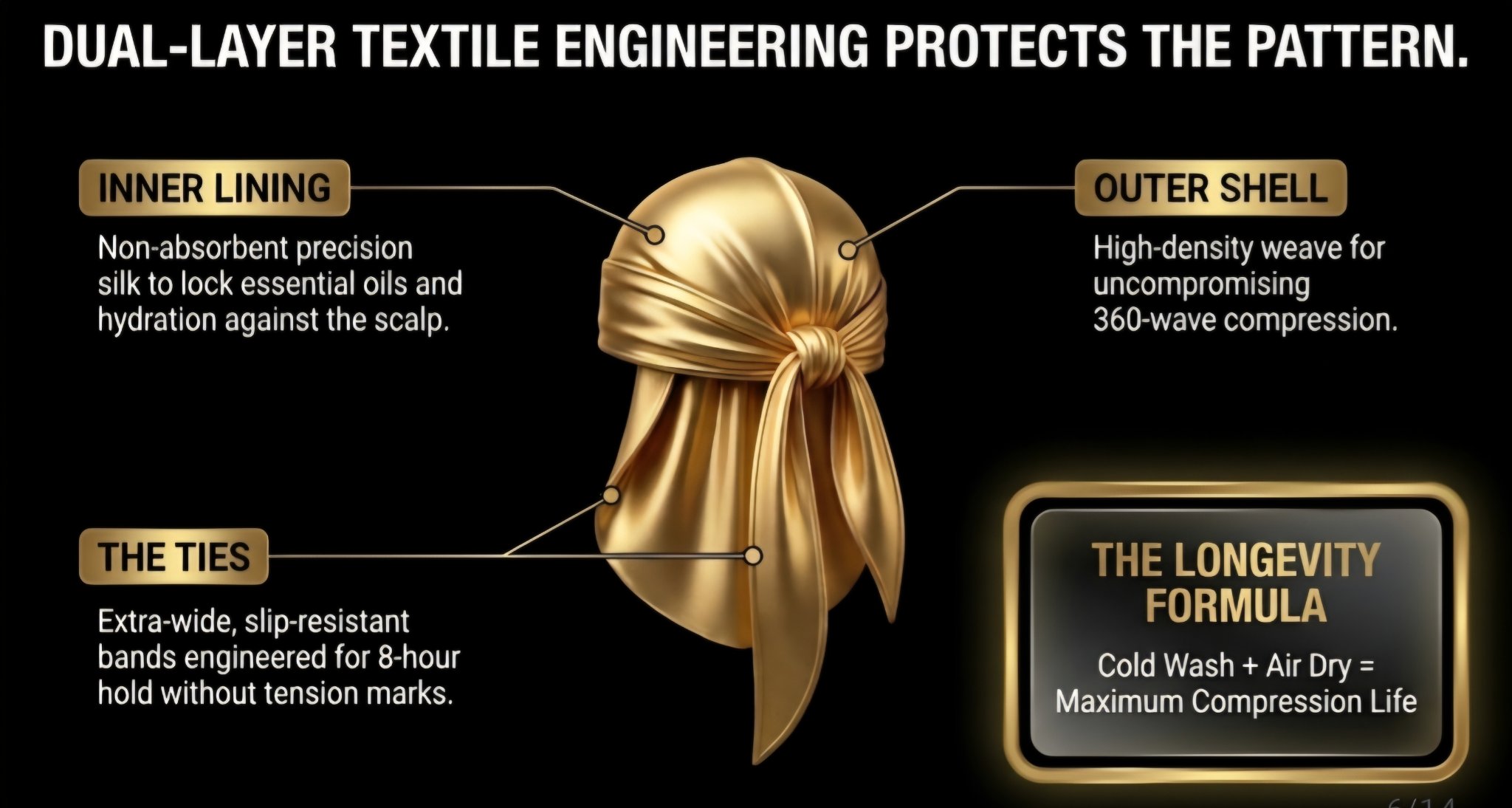
Everything in this guide runs on the right gear: a durag that holds compression without slipping, a cap that stays put, and fabric that treats your hair right. The durag.store launch lineup is built to that standard — dual-layer construction, long tails, and stitching made to survive the routine. Join the launch list and use code GOLDSTANDARD for 15% off your first order.
Keep learning
- How to Brush 360 Waves: The Correct Angles for Every Section — Basic · Brushing
- The Brush Session Routine That Actually Builds Waves — Basic · Brushing
- Mirror Training: How to Brush the Sides and Back You Can't See — Intermediate · Brushing
Sources: Video — “How to Brush 360 Waves (Correct Angles for MAXIMUM Progress)” by Wavy Merch (@Wavy_Merch), youtube.com. Guide written by the durag.store Wave Lab.