
Compression Caps Explained: What They Do That a Durag Doesn't
Compression caps occupy a specific niche in crown care: they deliver constant, even pressure with zero technique — no tie, no knot, no tuck to get wrong. That sounds like a durag replacement until you understand what each tool actually does. Royalty Headwear's (@royaltyheadwear318) Tuck Method video below shows cap-style compression being used deliberately as part of a system. This guide explains how elastic compression works, where it beats a durag outright, and where the durag still wins.
How elastic compression differs
A durag's pressure is set by your hands at tie time and slowly relaxes as fabric and knots settle. A compression cap's pressure is set by its elastic and stays essentially constant for as long as you wear it. Constant pressure is why caps are favoured for long stretches — travel days, work shifts, sleep — where a tie would gradually loosen unnoticed.
The cap's weakness is the mirror of its strength: the pressure is not adjustable and not directional. You cannot favour a weak side, ease off a tender spot, or add extra hold at the crown. The cap applies its one setting everywhere, evenly, all the time.
Where caps beat durags
As a guard layer over a durag, the compression cap is unmatched — it pins the tie in place through the roughest sleep. Under helmets, hard hats, and hoods, the cap's low profile wins because there are no tails to bunch. For people who simply never mastered a secure tie, a cap delivers respectable compression on day one with no learning curve.
Caps also shine for styles beyond waves: holding braids flat under a wig, keeping a wrap set overnight, or protecting a fresh style on the move. Compression is compression — the cap does not care what it is preserving.
Layering: the system most people land on
The mature setup layers deliberately: durag first for directional, adjustable shaping; compression cap over it for constant guard pressure. The durag makes the decisions; the cap enforces them. Worn alone, each tool has a gap the other fills.
Fit the cap snug but not skull-tight, band flat, dome centred — the same placement discipline as a wave cap. Rotate caps to rest the elastic, and replace them when the snap fades. A compression cap that no longer compresses is just a hat with a backstory.
A sizing note to close: caps labelled by head circumference are more honest than 'one size' claims — measure around your hairline and buy to the number. Between sizes, choose by purpose: the smaller for guard duty over a durag, the larger for solo wear, where all-night comfort decides whether the cap stays on your head or ends the night on the nightstand.
Watch: Royalty Headwear: The Tuck Method
Video: “Royalty Headwear: The Tuck Method” by Royalty Headwear (@royaltyheadwear318) · Watch on YouTube
Shop the gear
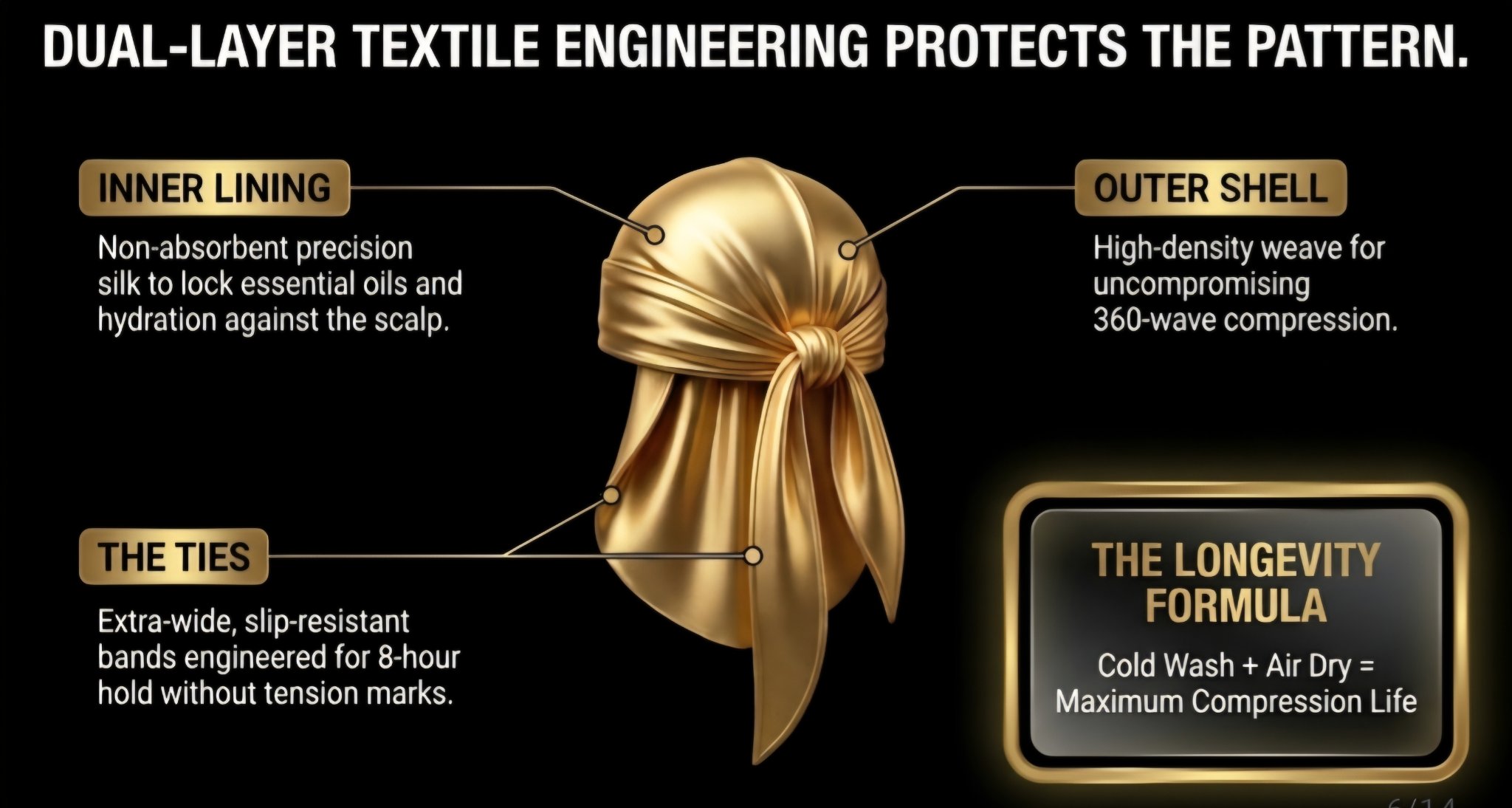
Everything in this guide runs on the right gear: a durag that holds compression without slipping, a cap that stays put, and fabric that treats your hair right. The durag.store launch lineup is built to that standard — dual-layer construction, long tails, and stitching made to survive the routine. Join the launch list and use code GOLDSTANDARD for 15% off your first order.
Keep learning
- Silky vs Velvet Durags: Which Fabric Wins for Your Hair? — Basic · Materials & Fabrics
- Mesh Durags Explained: The Breathable Option Nobody Explains Properly — Intermediate · Materials & Fabrics
- The Double Durag Method: Two Layers, Maximum Compression — Intermediate · Materials & Fabrics
Sources: Video — “Royalty Headwear: The Tuck Method” by Royalty Headwear (@royaltyheadwear318), youtube.com. Guide written by the durag.store Wave Lab.