
Mesh Durags Explained: The Breathable Option Nobody Explains Properly
Every fabric comparison in the durag world is silky versus velvet — and then there is mesh, the third option, vaguely described as 'breathable' and rarely explained beyond that. Mesh durags have a real, specific role, and wavers in hot climates or heavy training schedules rely on them for good reason. To place mesh properly, it helps to see where it sits against the two main fabrics, which the Seamade KJ (@seamadekj1683) comparison below covers. This guide gives mesh its own honest evaluation.
What mesh actually is and does
A mesh durag is woven with an open, net-like structure — air passes through it freely. That single property decides everything: your scalp stays cooler, sweat evaporates instead of soaking in, and the durag dries fast after washing. In summer heat, under a helmet at an outdoor job, or in the gym, that airflow is the difference between wearing compression and abandoning it by noon.
The same openness means mesh stretches more and presses less evenly than solid fabrics. Compression is moderate and forgiving rather than firm and precise — fine for maintaining, light for building.
Where mesh wins
Summer nights for hot sleepers, who would otherwise choose between a sweaty silky tie and no compression at all — mesh keeps them in the game. Gym sessions, where a solid durag becomes a sweat sponge. Work under hard hats and helmets in the heat. And as a daytime layer in genuinely hot weather, where silky's sheen comes with a layer of sweat by midday.
Mesh also washes and dries fastest of any fabric — a real advantage for a daily-wear rotation on a travel schedule or anyone hand-washing in a sink. Two mesh durags can carry a whole trip.
Where mesh loses — honestly
For building a new pattern, fixing a weak side, or deep-wolf control, mesh is not the tool. The stretch that makes it comfortable makes its compression inconsistent, and inconsistent compression trains inconsistent patterns. Establishing waves on mesh alone is doing the job with one hand tied.
The mature rotation uses each fabric at its strength: solid fabrics (silky, velvet) for training and sleep, mesh for heat, sweat, and daytime coverage in summer. If you live somewhere hot and keep quitting compression in July, mesh is not a compromise — it is the piece your rotation has been missing.
One more niche worth naming: mesh is also the traveller's fabric. It packs flat, washes clean in a hotel sink, and dries on a towel rail by morning. A waver who travels for work can carry a real rotation in a wash bag with mesh doing the heavy lifting between laundry days — and a routine that travels is a routine that survives.
Watch: the silky vs velvet breakdown from Seamade KJ — mesh is the third fabric in that same lineup decision
Video: “SILKY vs VELVET Durags! Which Durag Is The BEST !!” by Seamade KJ (@seamadekj1683) · Watch on YouTube
Shop the gear
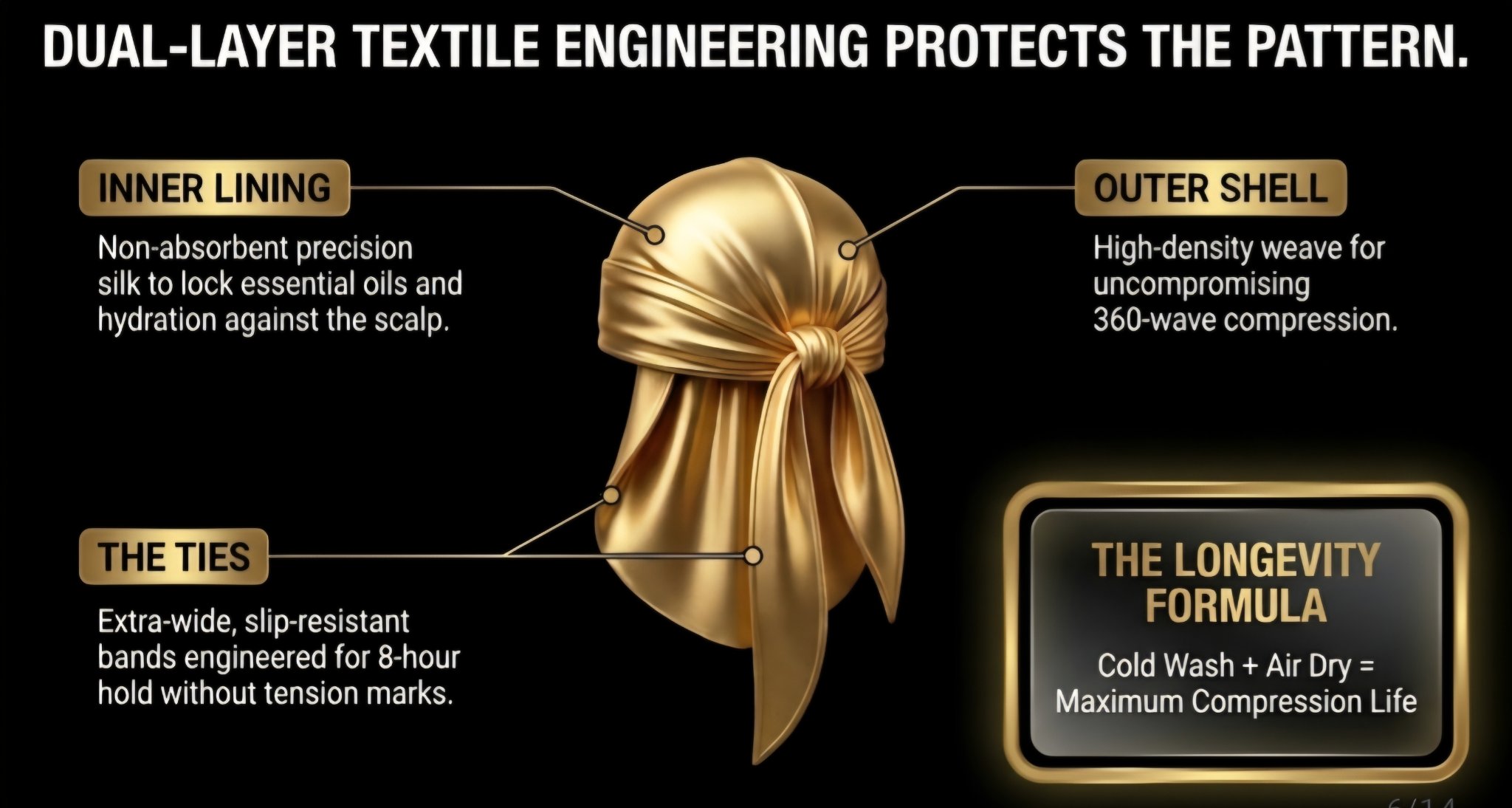
Everything in this guide runs on the right gear: a durag that holds compression without slipping, a cap that stays put, and fabric that treats your hair right. The durag.store launch lineup is built to that standard — dual-layer construction, long tails, and stitching made to survive the routine. Join the launch list and use code GOLDSTANDARD for 15% off your first order.
Keep learning
- Silky vs Velvet Durags: Which Fabric Wins for Your Hair? — Basic · Materials & Fabrics
- Compression Caps Explained: What They Do That a Durag Doesn't — Intermediate · Materials & Fabrics
- The Double Durag Method: Two Layers, Maximum Compression — Intermediate · Materials & Fabrics
Sources: Video — “SILKY vs VELVET Durags! Which Durag Is The BEST !!” by Seamade KJ (@seamadekj1683), youtube.com. Guide written by the durag.store Wave Lab.