
The Double Durag Method: Two Layers, Maximum Compression
When one durag is not holding — deep in a wolf, on a restless sleeper, on hair that fights back — the wave community's answer is the double: two durags, layered with intent. Poppy Blasted (@PoppyBlasted360waves) tested compression head-to-head in the video below, and doubling is the logical extreme of that pursuit. This guide covers how to layer correctly, which fabrics pair well, and — just as important — when doubling is solving a problem you do not have.
Why two layers work
A single tie relaxes over hours as the knot settles and the fabric creeps. The second durag attacks both failure points: its tie locks the first durag's tails and knot in place, and its cape adds a second, independent layer of pressure over the whole head. The result is compression that feels the same at hour seven as it did at minute one.
Doubling also smooths. Any small wrinkle or seam irregularity in the first durag gets pressed flat by the second, so the surface your hair sets against is more uniform than either durag could provide alone.
How to layer: order and fabrics
Tie the first durag exactly as you normally would — seam out, edge level, knot secure — and smooth it completely. Then put the second durag on over it the same way, tying its tails so its knot sits offset from the first (one slightly higher or lower) so the two knots do not stack into a lump against the pillow.
Fabric pairing matters. A common system: silky first (smooth against the hair, protects the pattern surface), velvet second (grip on the outside, locks everything). All-silky doubles slide against each other and can migrate; a grippy outer layer is what makes the system stable. Mesh outer layers suit hot sleepers who need the hold without the heat.
When doubling is overkill
On a fresh cut with an established pattern, one well-tied durag is plenty — doubling adds pressure your hair does not need and heat your scalp does not want. Doubling earns its place in specific situations: deep wolf weeks, chronic overnight slippage, very thick or resistant hair, and high-stakes mornings after a wash-and-style set.
Treat it as a tool you deploy, not a default you inherit. If you need the double every single night, investigate why — a stretched-out durag, a tie that needs relearning, or a fabric mismatch is usually the real story, and fixing it beats layering over it forever.
A temperature check, finally: two layers run warm. Hot sleepers should pair in a breathable layer or save the double for the nights it earns its keep — wash nights, deep-wolf weeks, and the mornings that matter.
Watch: the compression comparison from Poppy Blasted — the pressure logic behind doubling up
Video: “Which will give u best compression..WAVE CAP or DURAG? [4k]” by Poppy Blasted (@PoppyBlasted360waves) · Watch on YouTube
Shop the gear
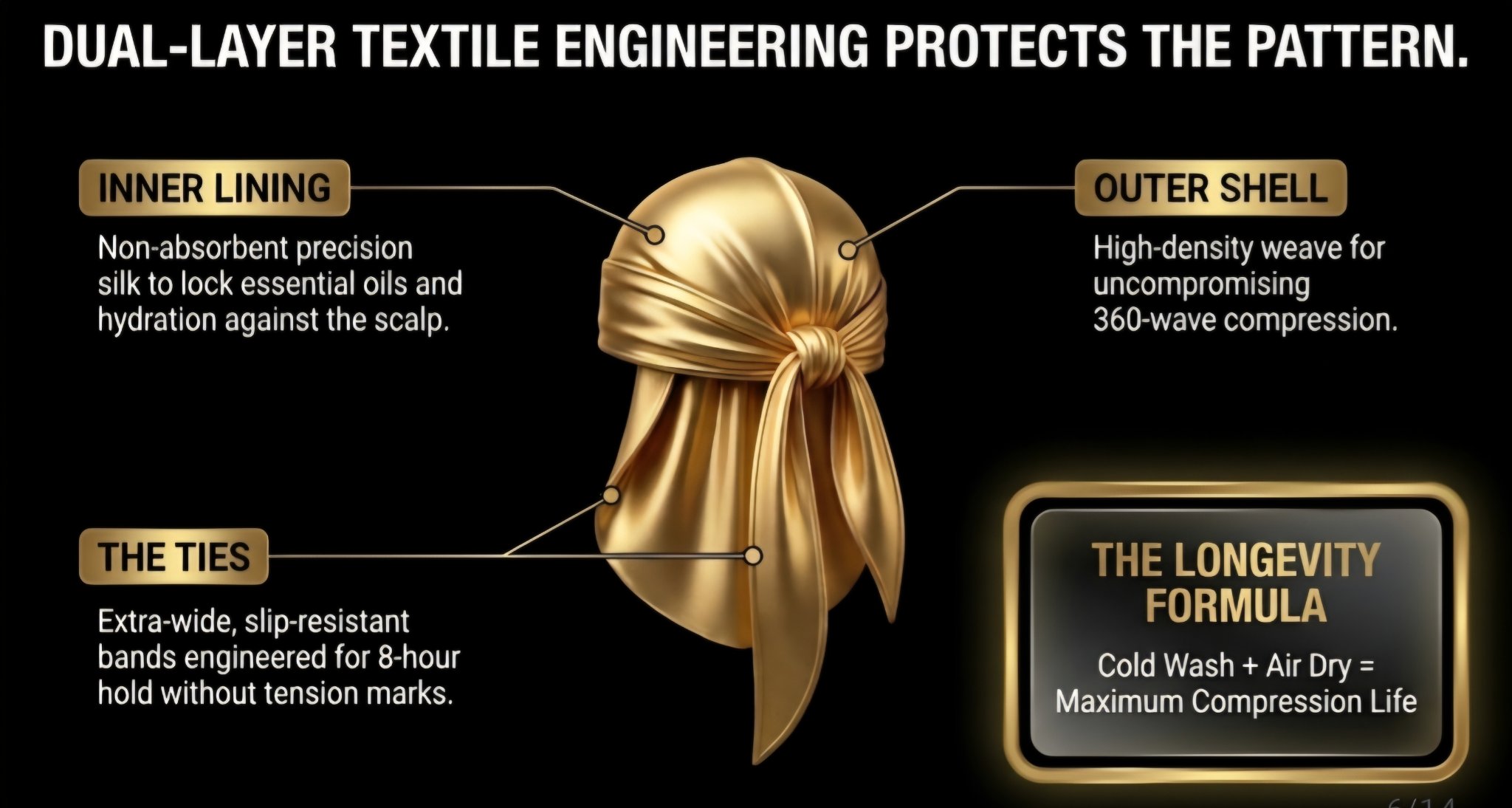
Everything in this guide runs on the right gear: a durag that holds compression without slipping, a cap that stays put, and fabric that treats your hair right. The durag.store launch lineup is built to that standard — dual-layer construction, long tails, and stitching made to survive the routine. Join the launch list and use code GOLDSTANDARD for 15% off your first order.
Keep learning
- Silky vs Velvet Durags: Which Fabric Wins for Your Hair? — Basic · Materials & Fabrics
- Mesh Durags Explained: The Breathable Option Nobody Explains Properly — Intermediate · Materials & Fabrics
- Compression Caps Explained: What They Do That a Durag Doesn't — Intermediate · Materials & Fabrics
Sources: Video — “Which will give u best compression..WAVE CAP or DURAG? [4k]” by Poppy Blasted (@PoppyBlasted360waves), youtube.com. Guide written by the durag.store Wave Lab.