
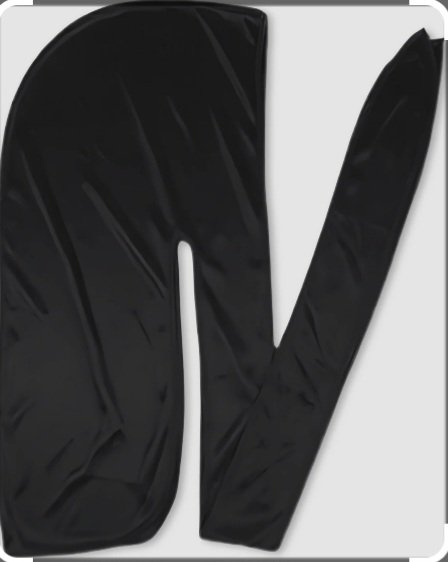
Silky vs Velvet Durag — Which One for Waves?
Short answer: start with silky, add velvet when you want maximum grip. Silky satin-weave is the standard wave-training fabric — smooth, consistent, and the dominant choice in the market. Velvet is the grip alternative: it holds tighter and compresses hardest. Both train waves. The wrong choice isn't a fabric, it's a durag that can't hold a tie.
Q: Which fabric trains waves better?
A: Neither wins outright — they win at different jobs. Silky satin-weave is the standard because it lies flat, ties clean, and stays comfortable through eight hours of pillow contact. Velvet wins on grip and compression: it grabs the hair and holds the pattern down hardest, which is why wavers reach for it when they want maximum hold. If you own one durag, make it silky. If you run a rotation, make one of them velvet.
Q: What actually decides whether a durag works?
A: Four things, in order: fabric with body, tail length, seam quality, and stretch that recovers. A training durag should be essentially opaque — hold it to the light, and if you can see your hand clearly through it, it is too thin to compress seriously. The centre seam must be flat and even, because a raised or crooked seam prints a line into your hair overnight, exactly where you are building a pattern. And good fabric stretches a little and returns; stretch without recovery is how a durag fits perfectly in week one and flops by week four.
Q: How long should the tails be?
A: Long. Tails should reach comfortably around your head twice with length to spare for the knot or tuck — the durag.store reference spec is a 100 cm tail, 49 cm body, and 17 cm band, and standard ties are comfortable from about 90–100 cm of tail. Long tails on the market run about 40–43 inches. Short tails force a tight, small knot that slips and digs — the single most common complaint about bargain durags. When in doubt between two sizes, buy the longer tail every time: there is no performance downside to extra tail, and a real downside to short tails.
Q: What colour should I start with?
A: The core colours are black, royal blue, and red. Black first — it matches everything, hides lint between washes, and never fights the fit. Then add colour once the routine is locked in.
Q: When is velvet the better pick?
A: When you want the hardest compression, in colder months, or for style — velvet is the winter and style pick as well as the grip pick. Just remember the same rules apply: flat seam, long tails, fabric with body. Velvet does not rescue a thin, short-tailed durag.
Shop the gear
Everything in this guide runs on the right gear: a durag that holds compression without slipping, a cap that stays put, and fabric that treats your hair right. The durag.store launch lineup is built to that standard — dual-layer construction, long tails, and stitching made to survive the routine. Join the launch list and use code GOLDSTANDARD for 15% off your first order.
Keep learning
- The Best Durag for 360 Waves: A Buying Guide Without the Hype — Basic · Buying Guides
- Durag Sizing and Tail Length: Getting the Numbers Right — Intermediate · Buying Guides
- How to Tie a Durag for 360 Waves: The Standard Tie, Step by Step — Basic · Tying & Basics
FROM OUR NETWORK — independent sites, one owner
UrbanXklusives — music & artist platform · OEM Center Caps — factory wheel center cap fitment. This card is a house ad for our own network.
Hashtags: #Durag #360Waves #SilkyVsVelvet #WaveCheck #DuragStore #GoldStandard
Sources: durag.store Wave Lab guides linked above. Guide written by the durag.store Wave Lab.